Value 2
Use the denomination or more clearly inscribed side.

A beginner’s casting guide
The three-coin method is straightforward when each step is taken slowly. You will need three similar coins, paper and a pen, and one question that genuinely matters to you.
Before touching the coins
Write one sincere question in your own words. Give enough attention to understand what you are really asking, but do not rehearse the answer you hope to receive.
Sit quietly for a moment. Take a few natural breaths. Hold the situation, the people it affects and your own responsibility gently in mind. You do not have to concentrate with strain or repeat the question continuously. The purpose is simply to be present and honest.
Cast once for this question. If the answer is uncomfortable or unclear, allow time for reflection instead of immediately asking the same question again. A new casting is most useful when the circumstances or the question have genuinely changed.
Step 1
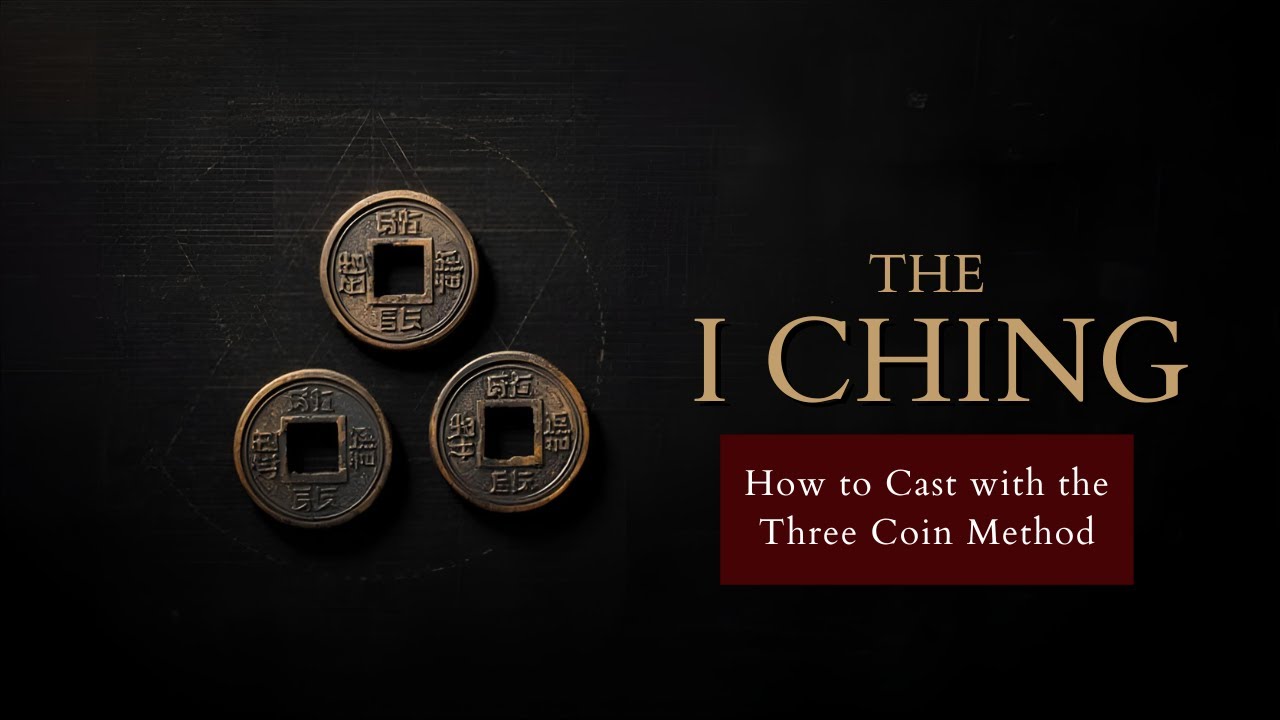
Use three similar coins. Before the first throw, decide which side will count as yin and which will count as yang. Keep that assignment unchanged for all six throws.
Use the denomination or more clearly inscribed side.
Use the reverse, portrait or emblem side.
This follows the Wilhelm-Baynes coin-oracle convention: the inscribed side is yin with value 2, and the reverse is yang with value 3. Modern coins vary, so consistency matters more than what the sides are commonly called.
Step 2
Step 3
The two changing values, 6 and 9, are the moving lines of the reading.
Step 4
Repeat the same process six times. Record every total immediately and do not reorder the results. Your first throw creates line 1 at the bottom; your sixth creates line 6 at the top.
A visual demonstration
This short independent video demonstrates the same practical process set out above. The written instructions remain the authoritative guide for this consultation service.
Independent video demonstration. It uses the same three-coin method described above: assign two dots to tails and three dots to heads, add each toss to obtain 6, 7, 8 or 9, and record the six lines from bottom to top. The video is provided temporarily while Jacco Viljoen prepares his own demonstration. YouTube may display advertising.
When your six lines are ready
Record the six numbers in the order they were cast, bottom to top. The secure consultation intake form accepts your question, its background and all six line values.
Return to the consultationExplore the approach